
Build Something Together
Hands-on team workshops where groups learn to weave and build a temporary tree net together.
The group starts with an empty outdoor space and over 1–3 days, works together to turn it into a full-scale woven structure. No previous experience is needed.


The workshop is focused on hands-on practice over theory. The group begins by learning the basic knots, materials, tensioning methods, and weaving techniques on a small scale before moving into the full build.
From there, we work together to set up the perimeter, divide the structure into workable sections, and begin weaving.
As the net develops, participants have to adjust spacing, manage tension, respond to the site, and adapt their work to what the rest of the group is doing.
The group starts with the basic knots, materials, and tensioning methods.
Together, the team lays out and tensions the perimeter.
Smaller groups take responsibility for different sections of the net.
As the structure develops, participants have to adjust spacing, tension, and direction based on what the rest of the team is doing.
The separate sections gradually become one finished structure.


Tree net weaving encourages people to work together in a few different ways:
The work requires attention, but not every ounce of it. That leaves room for conversation to develop naturally while people are focused on something together rather than sitting face to face trying to connect.


A full day of instruction and collaborative weaving, including:
Best for company offsites and teams that want one substantial shared experience during a larger gathering.
A deeper collaborative build with more time to settle into the process, including:
Best for company retreats and remote teams gathering together in person.
A multi-day collaborative build designed to become a central part of the retreat experience, including:
Best for groups that want the project itself to become a central part of the gathering.
Materials typically range from $1,200–$2,000. Travel and lodging are additional outside the Bay Area.
Workshops use temporary, non-invasive rigging methods with no permanent hardware left behind.
The finished structure can be enjoyed during the gathering and then fully removed afterward, allowing the site to return to its original condition.
Each workshop is adapted to the available outdoor space and can work with suitable trees or other approved support points.
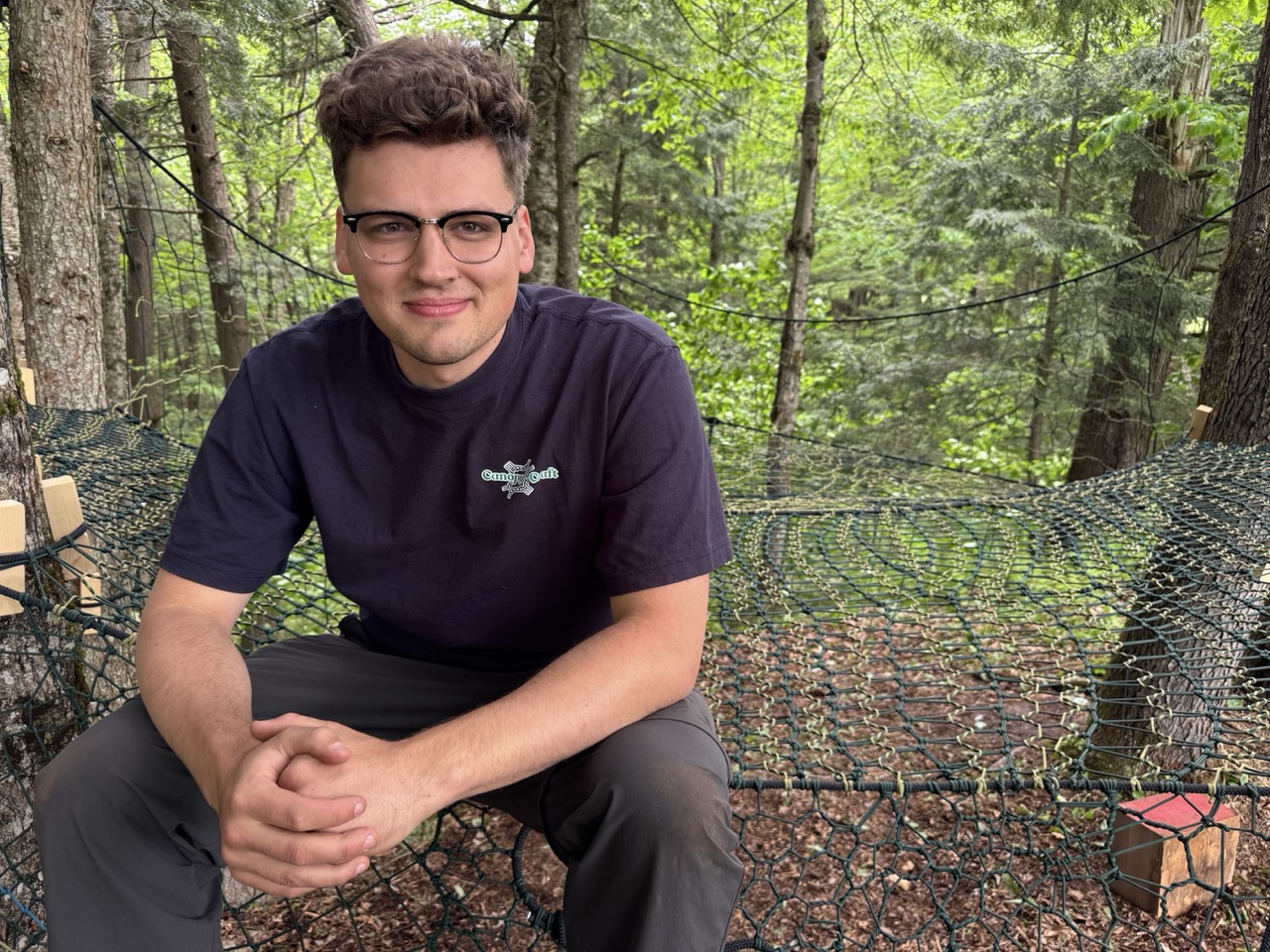
Sean Campbell is the founder of CanopyCraft LLC and has been designing, building, and teaching tree net weaving since 2020.
His work includes more than 30 installations across residential, retreat, educational, and play settings, along with hands-on workshops in the United States, Latin America, and Europe.
Sean has taught university students, community groups, international workshop participants, and more than 500 online students.
30+ installations
Workshops and retreats across multiple countries
500+ online students
University and community teaching experience
Most workshops are designed for roughly 10–15 active participants. Larger groups may also be possible with additional facilitation and a suitable site. The structure and workflow can be adapted based on the number of people involved.
No previous weaving, knot-tying, or rope experience is needed. The workshop starts with the basics, including the core knots, materials, and tensioning methods, before the group moves into the full-scale build.
The workshop requires a suitable outdoor space with three to four mature trees or other approved support points. Before confirming the workshop, I’ll review the site with you to make sure there is enough space for the group to work and that the location is appropriate for a temporary build. The host is responsible for securing permission from the property owner or venue.
The standard team workshop is designed around a temporary build. The net can be used and enjoyed during the gathering, then fully disassembled afterward with no permanent hardware left behind. Permanent installations are a separate type of project and can be discussed independently.
Most of the weaving takes place from the ground or at a comfortable working height. Participants can move between different parts of the process, and the group can divide tasks based on interest, comfort, and ability. No climbing experience is required. The workshop does involve being outdoors, standing, moving around the site, and working with rope for extended periods.
Some light weather may be workable, but heavy rain, strong winds, extreme heat, or other unsafe conditions may require changes to the schedule. Weather considerations and possible backup plans will be discussed with the host in advance.
The workshop fee covers: - Workshop planning and preparation - Site review and build design - On-site instruction and facilitation - Setup guidance throughout the build - Ongoing support and problem-solving during the workshop Materials are priced separately based on the size of the build and number of participants. Travel and lodging are additional for workshops outside the Bay Area.
Yes. The workshop can be structured as a one-day team experience or woven into a longer retreat over two or three days. The exact schedule depends on the group size, site, available time, and scale of the build.
Start by sending over a few details about your group, location, dates, and venue. I’ll review the information personally and follow up to determine whether the workshop is a good fit. From there, we can schedule a short call, review the site, and put together a specific plan and proposal.